
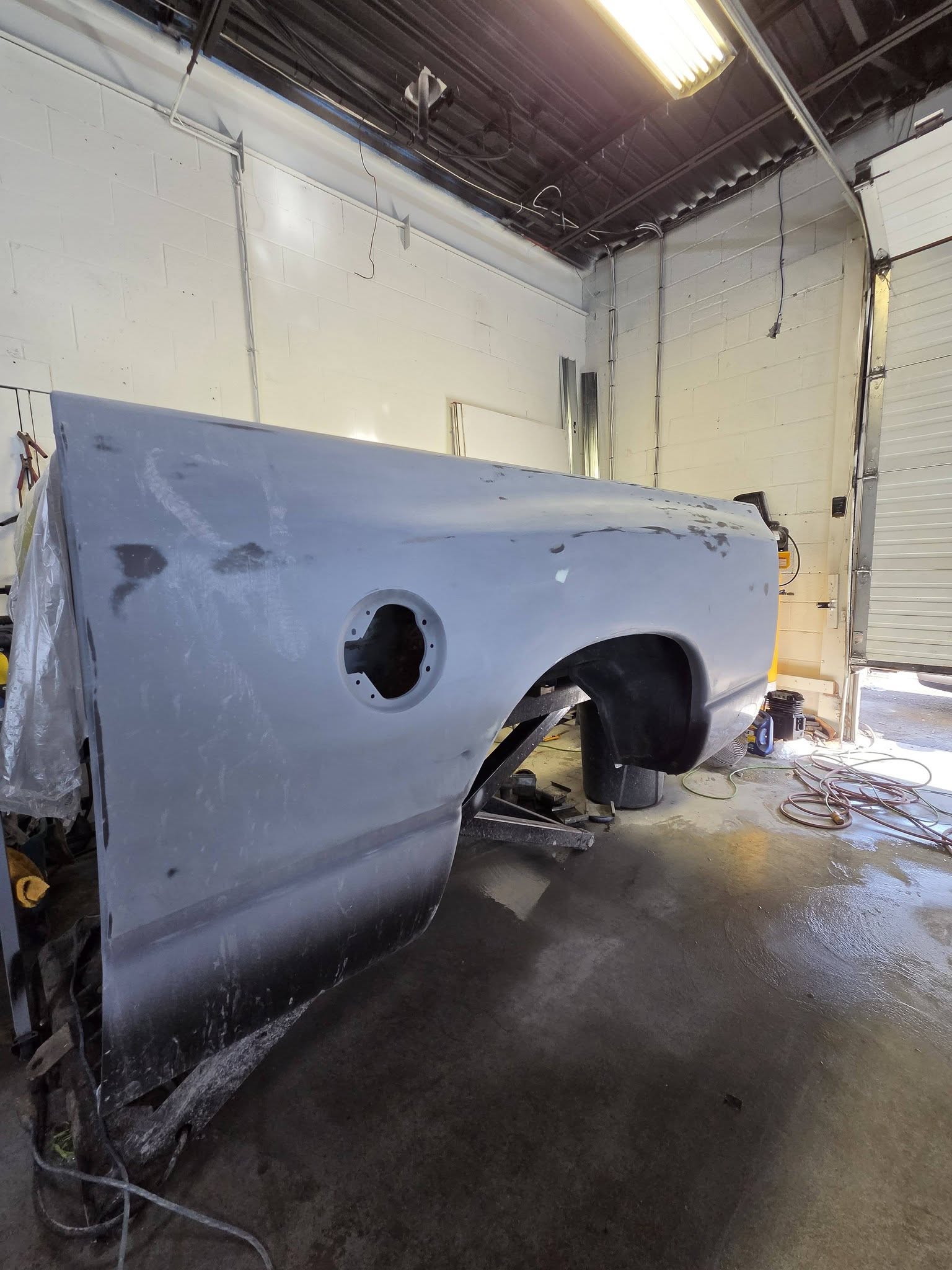
Jack point repair in Markham — safe lifting points, rebuilt in steel.
Jack points are small, but they carry the full weight of your vehicle every time it's lifted. When road salt eats through the reinforced pinch weld, a jack or lift can no longer be trusted there. We cut out the corrosion and rebuild the structure to factory strength.
Why it matters
A small part with a big job
The jack point is a reinforced, box-shaped section of the pinch weld at the base of the rocker panel — one at each corner of the vehicle. It's built to concentrate the entire weight of that corner of the car onto a small footprint, whether it's your factory scissor jack on the shoulder of a highway or a two-post lift in a service bay. It's not decorative and it's not optional structure — it's a designed load path.
That same low, boxed-in shape is exactly what makes it vulnerable. Jack points sit at the lowest point of the body, directly in the path of wheel spray, slush, and road salt brine. Water gets trapped inside the box section, drainage is poor by design, and the metal gauge is thin to keep weight down. In the GTA, where roads are salted heavily from November through April, this is consistently one of the first structural areas to perforate — often years before the rest of the rocker panel shows visible damage.
The risk isn't cosmetic. A jack point that has thinned or rusted through can crumple, fold, or punch straight through under load. That can mean a vehicle slipping off a jack on the shoulder of the road, or a shop lift arm finding nothing solid to grab onto. We rebuild the area back to its original reinforced strength — not patched, not bridged, actually load-bearing again.
Common jack point problems we see
- Rust bubbling or paint lifting at the base of the rocker, just ahead of or behind a wheel well
- A shop declining to lift the vehicle on the factory points because the metal feels soft
- The factory jack punching through the floor of the jack point box during a roadside tire change
- Trapped moisture and packed road salt inside the pinch weld box, invisible from outside
- Rust that has spread from the jack point into the adjoining rocker panel or floor pan
- Previous 'repairs' where the area was bridged with sheet metal screwed or pop-riveted in place
- Bondo or seam sealer used to mask thinning metal instead of replacing it
- Inner reinforcement structure rusted away while the outer rocker skin still looks intact
Our process, step by step
- 01
Lift and inspect
We assess the vehicle on a lift that doesn't rely on the compromised jack points, checking how far corrosion extends into the rocker, floor pan, and inner structure before quoting anything.
- 02
Cut back to solid steel
Every trace of rusted and thinned metal is removed from the jack point box and surrounding pinch weld until only clean, solid steel remains — no shortcuts, no metal left 'good enough.'
- 03
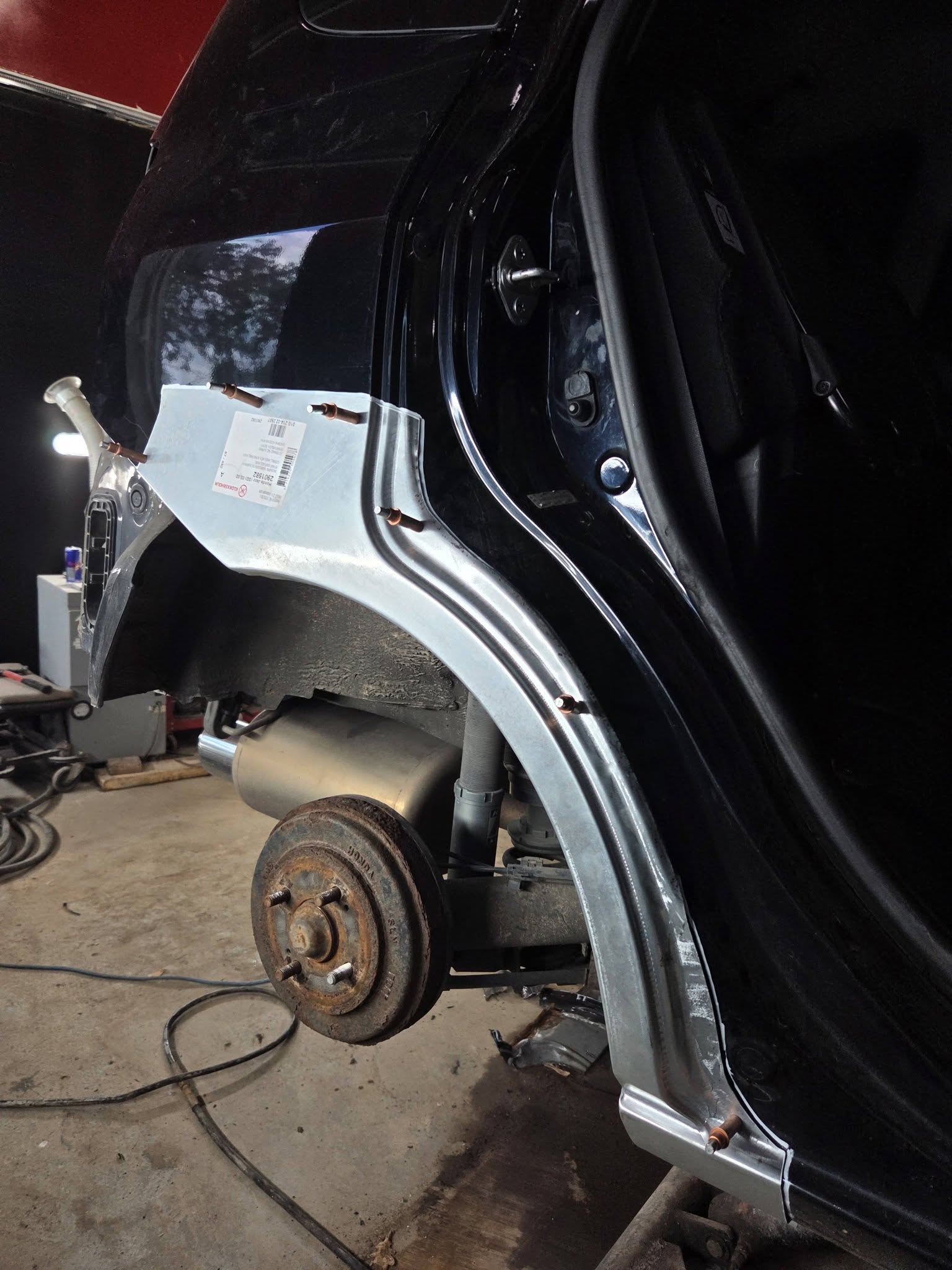
Fabricate the reinforcement
We form a new jack point section that matches the factory reinforcement pattern and gauge, so the finished repair carries load the way the vehicle was engineered to.
- 04
Weld in factory pattern
The new section is MIG welded into place following the original spot-weld and seam pattern, restoring the structural box section rather than just bridging a hole.
- 05
Seal and refinish
Seams are sealed against future moisture intrusion, the area is primed and refinished to match, and the repair is verified safe to jack and lift on before the vehicle leaves.
When to repair — and when it's too late
Caught early — surface bubbling, minor softness, a shop hesitant but still willing to lift carefully — a jack point repair is a contained, single-area fix. Left alone, the corrosion doesn't stay contained. It spreads upward into the rocker panel and inward toward the floor pan, and what started as a localized box section can turn into a full rocker and floor repair. If a shop has already refused to lift your vehicle on the factory points, that's a clear signal the structure has already failed — it's time to book an inspection, not wait for it to get worse. The good news is that jack point rust rarely appears without warning; if you notice bubbling paint low on the rocker, it's worth having it looked at before your next tire change or oil change.
What determines the cost
- How many jack points on the vehicle need repair
- How far corrosion has spread into the rocker panel or floor pan
- Whether the inner reinforcement structure needs to be rebuilt, not just the outer skin
- Access — some vehicles require more disassembly to reach the pinch weld box
- Condition of adjacent panels and whether blending or refinishing is needed
- Vehicle make and model, which affects the complexity of matching the factory reinforcement pattern
Frequently asked
- How do I know if my jack points are rusted out?
- The most common sign is a shop telling you they can't safely lift your vehicle on the factory points. You may also notice bubbling paint, flaking rust, or soft/spongy metal at the base of the rocker panel, just ahead of or behind the wheel wells, when you press on it.
- Why would a shop refuse to lift my car on the jack points?
- A rusted jack point can't be trusted to hold the vehicle's weight. If the reinforced pinch weld has thinned or perforated, the metal can fold or punch through under load, dropping the car off the jack or lift. Reputable shops will decline the lift rather than risk that, and will point you toward getting the jack points repaired first.
- Is jack point repair required to pass an Ontario safety inspection?
- Yes. Jack points and pinch welds are structural, load-bearing areas and are checked as part of an Ontario Motor Vehicle Inspection Station (MVIS) safety inspection. Perforated or missing structural metal in these areas is a fail condition.
- How much does jack point repair cost?
- Repairing a single jack point typically runs less than a full rocker panel replacement, since the affected area is smaller and localized. Exact cost depends on how far the corrosion has spread into the rocker and floor pan. We provide an itemized, photo-documented quote before any cutting begins.