
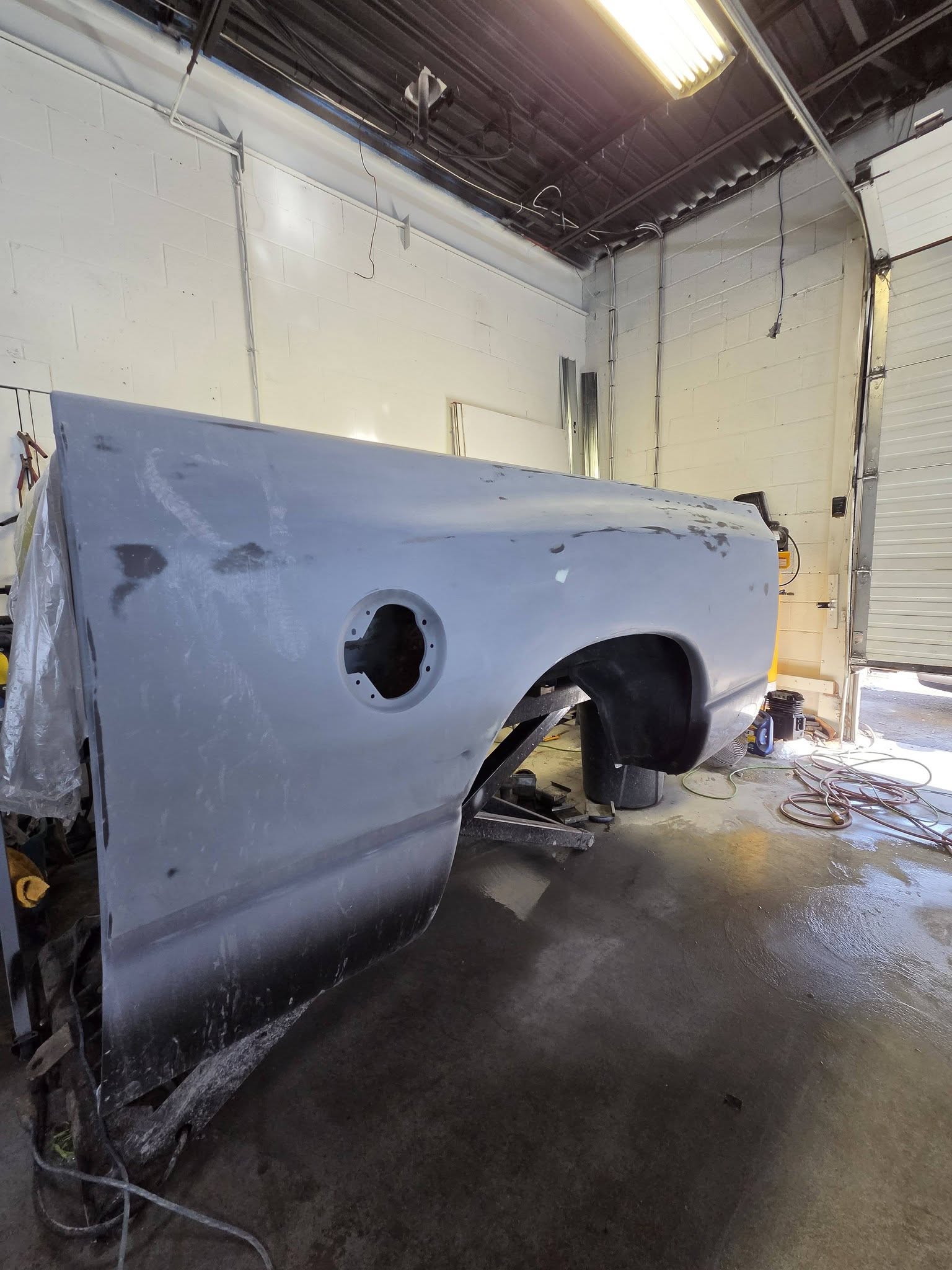
Cab corner repair in Markham — fabricated in steel, welded to last.
Where the cab meets the bed is one of the first places rust shows up on a GTA pickup. Road spray from the rear tire collects there with almost nowhere to drain or dry, and factory seam sealer only holds back water for so long. We cut out the corrosion, fabricate a new cab corner, and weld it in — not bolt it on.
A truck-specific rust trap
Why cab corners rust out first
The cab corner sits directly behind the rear door, right where the cab meets the bed on a pickup truck. It's a low-airflow pocket in a high-spray zone — the rear tire kicks up a constant stream of salt-laden slush all winter long, and that spray settles into the seam between the cab and bed with almost no chance to dry out. Add in the factory seam sealer, which hardens and cracks with age, and water eventually finds its way behind the panel and stays there.
Because it's one of the most visible panels on the vehicle, a rusted cab corner is also one of the first things people notice — and one of the first things a used-truck buyer or inspector will look for. Left alone, what starts as a small bubble in the paint can spread up into the door jamb and down into the rocker panel, turning a contained repair into a much larger one.
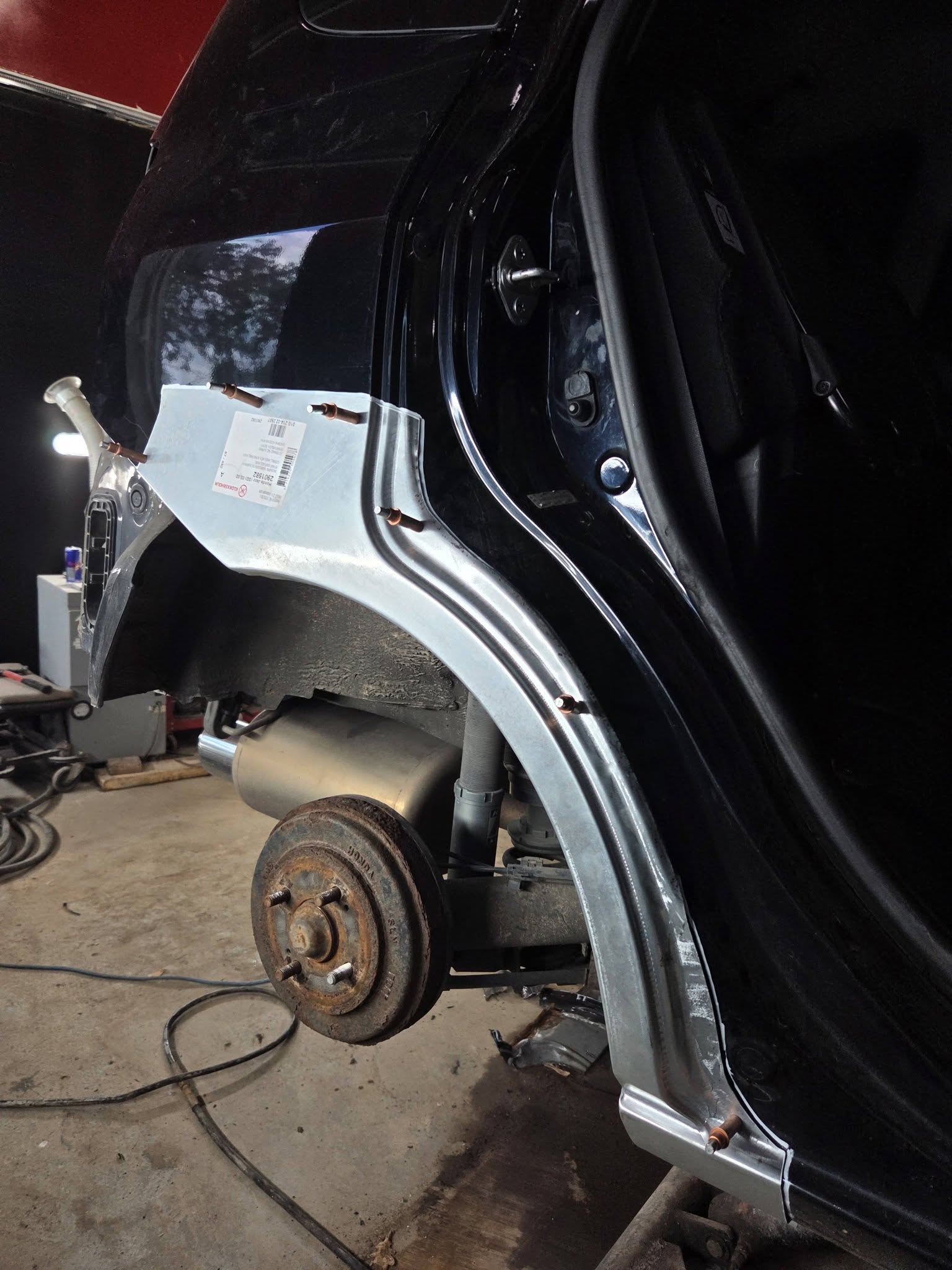
We fabricate a replacement cab corner in steel, matched to your truck's body lines, and weld it in the same way the factory joined the panel. No pop rivets, no glue-on patch panels — just a clean cut, a proper weld, and a seam that's sealed against water the way it should be.
Common cab corner problems on GTA trucks
- Bubbling paint near the bottom of the door opening
- Rust-through at the seam where the cab meets the bed
- Corrosion spreading up into the door jamb
- Rust migrating down into the rocker panel
- Soft or crumbling metal you can push through with a thumb
- Flaking undercoating hiding advanced corrosion
- Mismatched paint from a previous bolt-on patch job
- Water staining inside the cab near the rear door sill
Cosmetic or structural? Both.
Cab corners are often treated as a cosmetic fix, but they're semi-structural — the panel ties into the rocker panel below and, on many trucks, sits close to the cab mount area. Rust that's allowed to eat through the cab corner rarely stays contained to that one panel. It tracks along the seam into the rocker and the door jamb, which is why we always inspect both areas before quoting, even if the damage you called about is just the visible bubble on the corner.
Our process, step by step
- 01
Inspection and photo documentation
We check the cab corner, door jamb, and rocker together, since rust rarely respects panel boundaries. You get photos showing exactly how far the corrosion has spread before we quote anything.
- 02
Cut out the corroded panel
The rusted cab corner section is cut back to solid, healthy steel — including any hidden corrosion tracking up into the jamb or down toward the rocker.
- 03
Fabricate a new cab corner in steel
We shape a replacement panel to match your truck's factory body lines and contours, so the repair sits flush and reads correctly from every angle.
- 04
Weld it into place
The new cab corner is MIG welded in following the factory seam pattern, ground smooth, and treated with weld-through primer to prevent flash rust before finishing.
- 05
Seal seams and blend the paint
Seam sealer goes back where the factory applied it, cavities get rust-proofing wax, and the panel is primed, colour-matched, and blended into both the bed and the door jamb so there's no visible break.
When to repair — and when it's too late
A small bubble at the bottom of the door opening is an easy, affordable fix if you catch it early — often a contained patch with minimal welding. Once the rust has tracked up into the door jamb or down into the rocker, the job grows to cover multiple panels, and the labour to blend paint across three surfaces instead of one adds real cost. Left through another Ontario winter, advanced cab corner rust can compromise the rocker's structural integrity and put the vehicle at risk of failing a Motor Vehicle Inspection.
If you're seeing bubbling paint behind the rear door or a soft spot near the bed, send us photos before it spreads further. We'll tell you honestly whether it's a same-week fix or something to plan for.
What determines the cost
- How far corrosion has spread into the jamb or rocker
- Truck make and model, and panel availability
- Whether the rocker also needs repair
- Cavity sealing and rust-proofing after the weld
- Colour match and blend complexity across bed and jamb
- Fabricated vs reproduction panel
Frequently asked
- How much does cab corner repair cost?
- Most cab corner repairs fall between $500–$1,200 per side, depending on how far the corrosion has spread into the door jamb or rocker, and how much paint blending is needed to match the bed and cab colour. We give you an itemized quote before any cutting starts.
- Can you use a bolt-on or pop-riveted patch instead of welding?
- We don't recommend it. Bolt-on cab corner patches trap moisture behind the seam and rust out again within a couple of winters. We weld a fabricated steel corner into place so the repair is sealed and structurally sound, the way the factory built it.
- Will a rusted cab corner fail Ontario safety inspection?
- It can. Cab corners tie into the rocker panel and cab mount area, so significant corrosion there is often flagged during a Motor Vehicle Inspection. A welded repair to OMVIC standards will pass and can be verified by any licensed inspector.
- Will the paint match after a cab corner is replaced?
- Yes. We blend the new panel into both the door jamb and the bedside using a computer-matched paint code, then fade the clear coat into the surrounding panels so there's no visible line where the repair ends.