
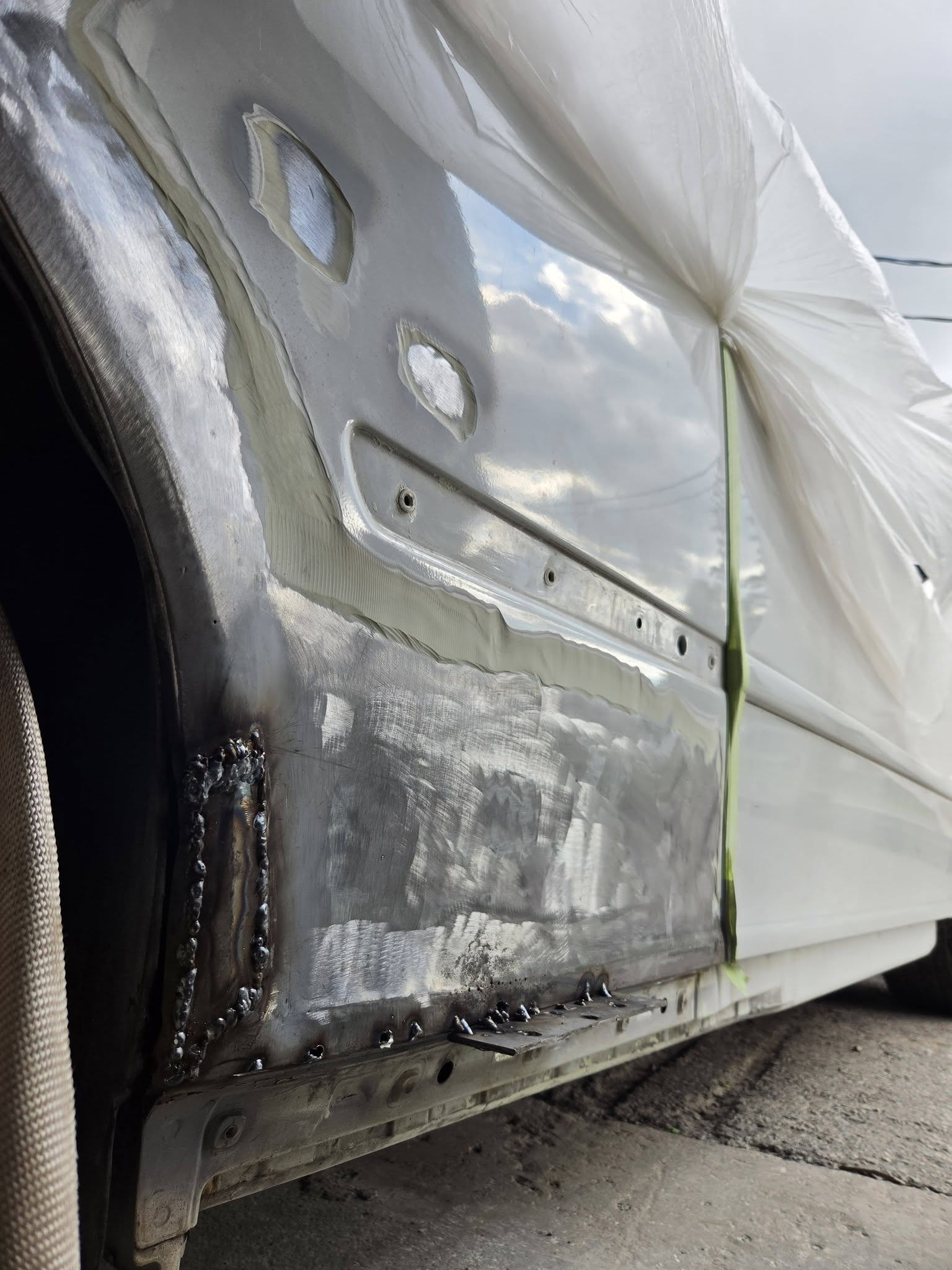
Rocker panel repair in Markham — rebuilt in structural steel.
Rocker panels are the sill beams running below your doors — a core part of the vehicle's side-impact structure, and the single most common place road salt destroys an Ontario vehicle from the inside out. We cut back to solid steel, fabricate new inner and outer sections, and weld them in to spec.
Why rockers fail first
A structural part with nowhere for water to drain
A rocker panel isn't a single sheet of metal — it's a boxed structure made of an inner rocker, an outer rocker skin, and often a reinforcement layer sandwiched between them. That box shape is what gives the rocker its strength as a load-bearing sill and a side-impact structure. It's also what makes it a trap.
Road salt, slush, and moisture get thrown up from the wheels all winter and collect inside that cavity. There's no drainage path built in, and no way to see or spray-wash it out. The corrosion starts on the inside of the inner panel and works outward, which means a rocker can be structurally rotted for a year or more before any rust shows on the visible outer skin.
Because rockers tie directly into the pinch welds where a jack or lift contacts the car, and into the A-pillar and B-pillar bases, rust here isn't cosmetic — it affects how safely the vehicle can be lifted and how it performs in a side impact. This is a repair where cutting corners isn't really an option.
Signs of rocker panel rust
- Doors that have started to sag, drop, or no longer close flush
- A spongy or soft feeling in the sill when you step in or out
- Bubbling or blistering paint just below the door line
- Visible pinholes or flaking along the bottom edge of the rocker
- A rattling or drumming sound from underneath over bumps
- Rust staining or moisture trails around the rocker-to-fender seam
- Failed or flagged rocker structure on a safety inspection
- Visible rust in the wheel well that traces back toward the rocker
Our process, step by step
- 01
Inspect the full cavity
We open up the rocker to see how far corrosion has traveled through the inner structure, not just what shows on the outer skin, before we quote anything.
- 02
Cut back to solid steel
Every trace of rusted and compromised metal is removed — inner rocker, outer skin, and reinforcement — until only sound steel remains at the edges.
- 03
Fabricate replacement sections
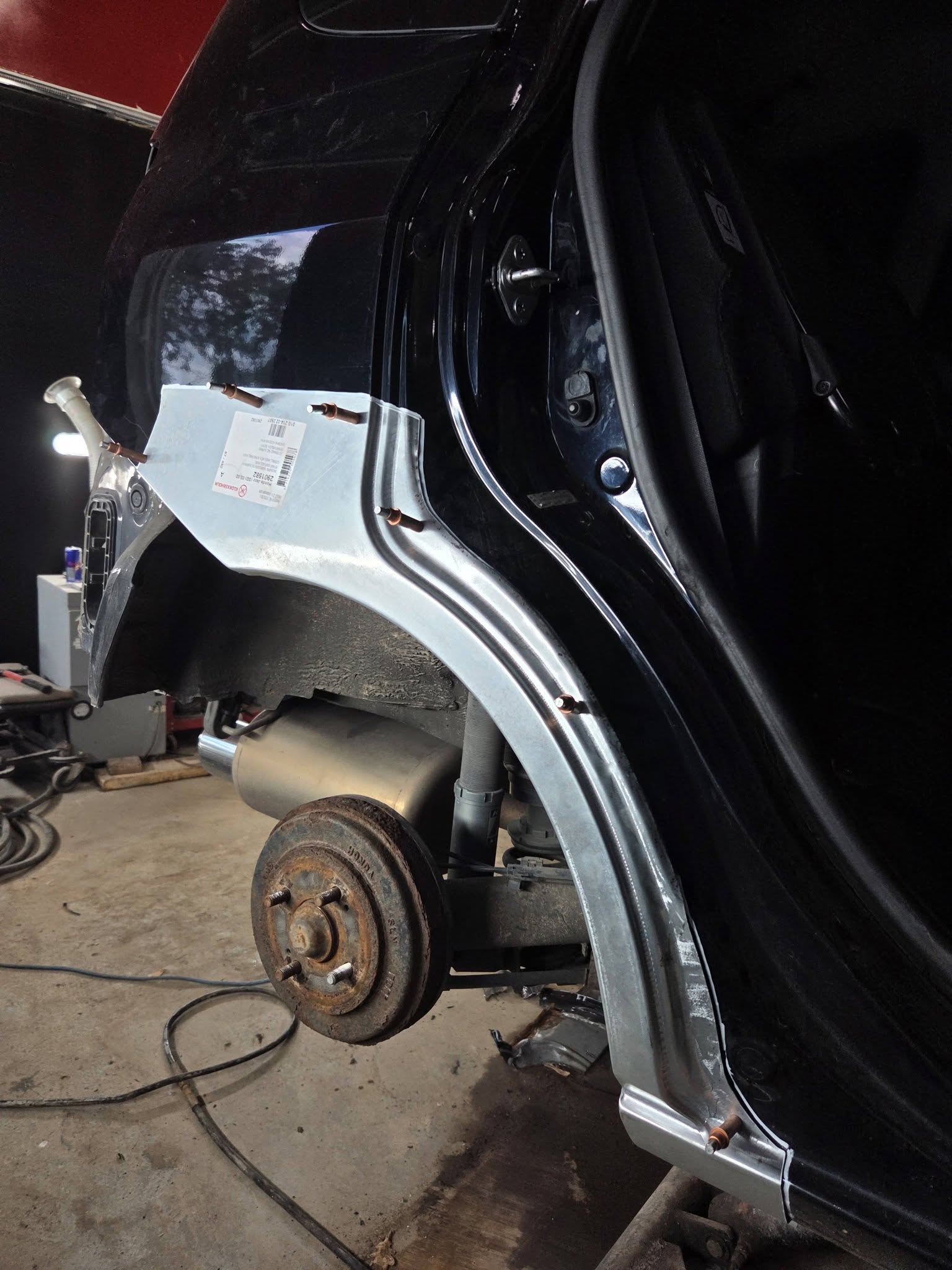
Inner and outer rocker panel sections are fabricated to match factory profile and gauge, either as a partial patch or a full-length replacement depending on how far the rust reached.
- 04
Weld to structural spec
New steel is MIG welded in at the correct seams and pinch weld locations so the rocker meets Ontario Motor Vehicle Inspection Standards for structural repairs.
- 05
Seal, cavity wax, and refinish
Seams are sealed, the inner cavity is treated with rust-inhibiting cavity wax to prevent a repeat failure, and the outer panel is primed, blended, and refinished to match.
Patch repair vs. full replacement
If corrosion is contained to a section of the rocker and the inner structure on either side is still solid, a fabricated patch section welded in cleanly is a durable, cost-effective fix. But once rust has reached the pinch weld, the rocker-to-pillar joints, or has traveled the full length of the inner rail, patching only the visible section leaves hidden rot behind the repair — it will resurface within a season or two. At that point, a full rocker replacement, inner and outer, is the only repair that restores real structural integrity. We won't recommend a patch where a patch won't hold; we'll show you exactly what we find once the panel is opened up.
What determines the cost
- How far corrosion has traveled through the inner structure
- Whether a partial patch or full rocker replacement is needed
- Condition of adjacent panels — cab corners, quarter panels, floor pans
- Whether pinch weld or jack point areas are also compromised
- Access and disassembly required — trim, sills, wiring harnesses
- Paint match and blend area on the outer panel
Frequently asked
- How do I know if my rocker panels are rusted if I can't see it from outside?
- Look for a soft, spongy feel when you step on the door sill, doors that have started to sag or are harder to close flush, bubbling paint just below the doors, or a rattle over bumps. By the time rust is visible on the outer skin, the inner structure is usually already compromised — the outer panel is often the last thing to go.
- Will rocker panel repair pass Ontario safety inspection?
- Yes, when it's done as structural repair. Rockers are a checked item under the Ontario Motor Vehicle Inspection Standards because they're part of the vehicle's side-impact structure. We weld to spec so the repair holds up to inspection and to a real collision.
- Do I need a full rocker replacement or just a patch?
- It depends how far the corrosion has traveled. If rust is contained to a section and the inner structure nearby is solid, a fabricated patch section welded in is enough. If the inner rocker, pinch weld, or rocker-to-pillar joints are compromised, a full rocker replacement is the only repair that's actually safe.
- How much does rocker panel repair cost?
- Partial patch sections typically start around $600–$1,200 per side. Full rocker replacement — including inner structure, pinch welds, and refinishing — runs higher because of the fabrication and labor involved. We inspect the full rocker cavity before quoting so there are no surprises once we cut it open.