
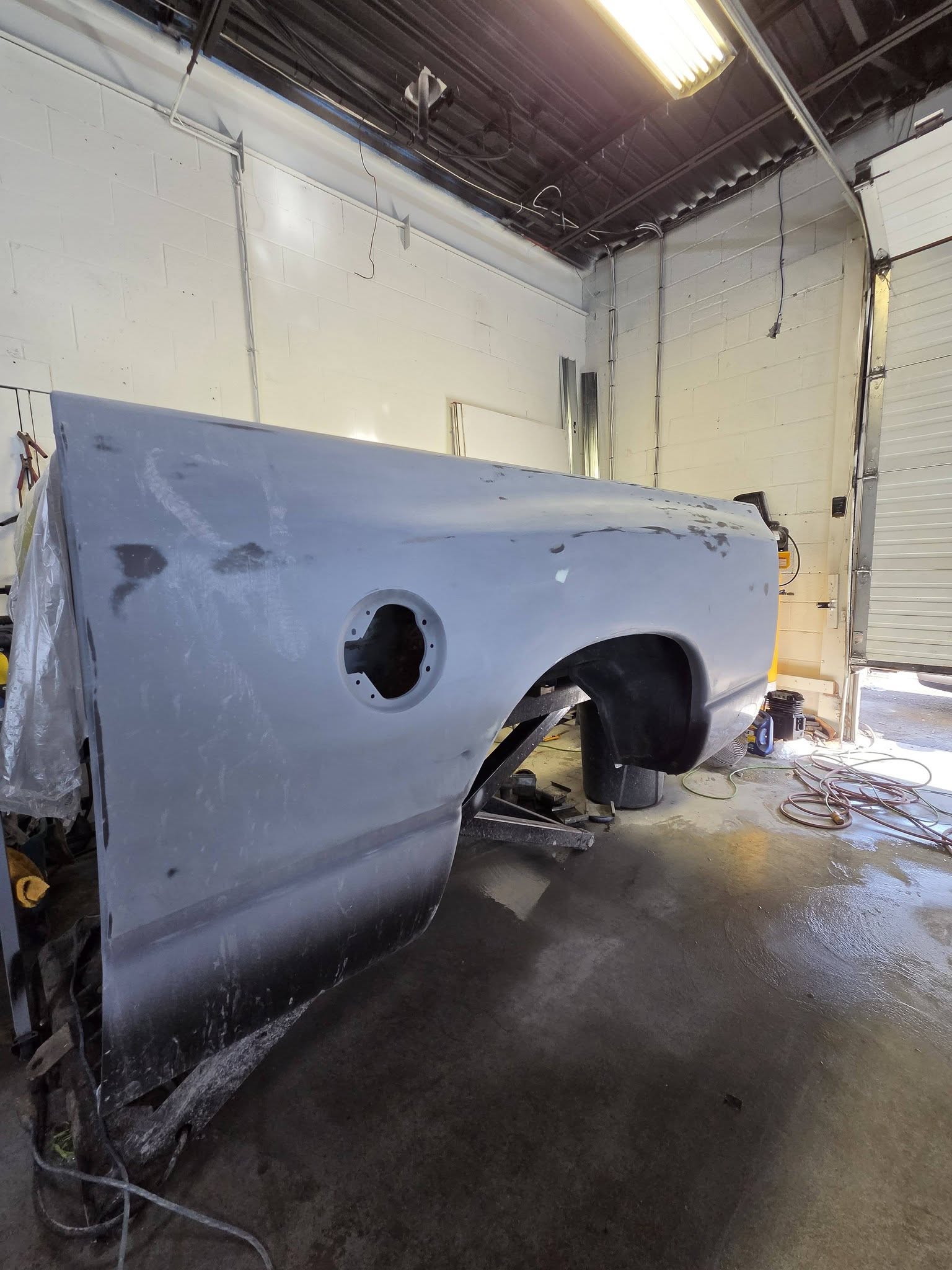
Quarter panel repair in Markham — rebuilt in steel, not filler.
Quarter panels are the most visible body panels on the car — and among the first to rust from the inside out. We cut back to sound metal, fabricate patch or full-skin panels that match your factory body lines, weld them in, and blend the paint until the repair disappears.
Why the inside matters as much as the outside
Quarter panel rust starts where you can't see it
A quarter panel is the large single piece of sheet metal that runs from the back door or C-pillar, over the rear wheel arch, back to the taillight. It has no seams across its face, which is exactly why rust on it looks so alarming and why it's so easy to underestimate — the damage almost never starts on the visible surface.
Behind the panel sits the inner wheelhouse: a folded structure that channels road spray, mud, and salt brine thrown up by the rear tire. That inner structure has drain points and seams that clog with debris over an Ontario winter, holding wet salt against bare metal for months at a time. The corrosion eats through the inner wheelhouse first, then works outward through the quarter panel itself — which is why a paint bubble the size of a coin can sit above a much larger area of thinned or perforated metal you can't see from outside.
Repairing it right means addressing both layers: the inner structure that's trapping moisture, and the outer skin that shows the damage. Skipping the inner repair and just patching the visible bubble is the single most common reason quarter panel rust comes back within a year or two.
Common quarter panel problems we see
- Paint bubbling in a ring above the rear wheel arch
- Rust-through at the lower edge where the panel meets the rocker
- Corrosion inside the wheelhouse behind an intact-looking skin
- Bubbling or bleed-through along the wheel lip molding line
- Rust migrating up toward the taillight or C-pillar seam
- Previous filler repairs cracking and lifting over hidden rust
- Trapped moisture from clogged inner drain channels
- Stone-chip corrosion spreading unnoticed under trim or moldings
Our process, step by step
- 01
Inspect thoroughly
We assess the visible damage and inspect the inner wheelhouse and structure behind it to find the true extent of the corrosion — not just what shows through the paint.
- 02
Cut back to sound steel
Every trace of rusted and pitted metal is removed, both on the outer skin and the inner structure behind it, until we're working with clean, solid steel.
- 03
Choose patch or full skin
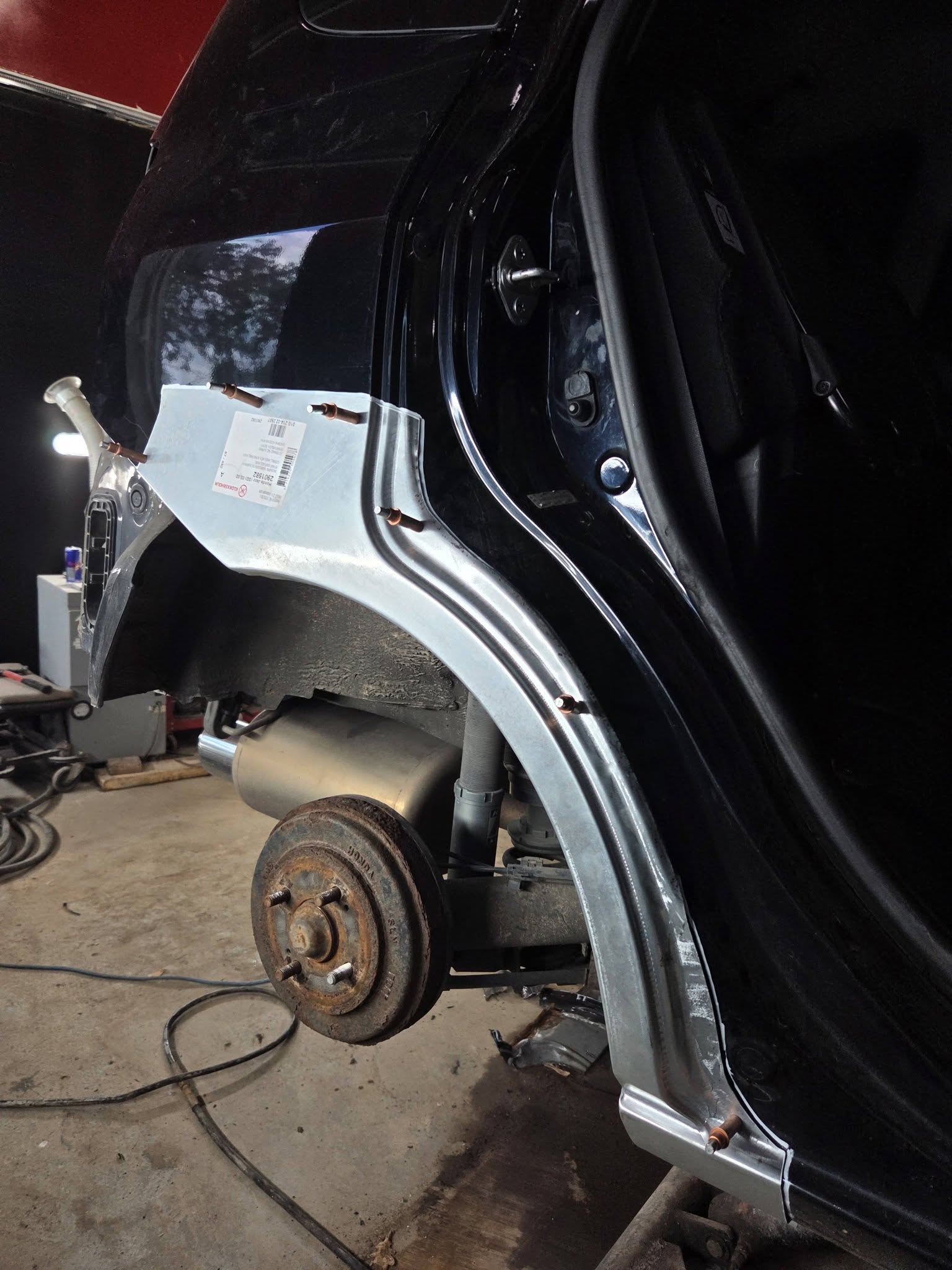
Based on how far the corrosion extends, we fabricate either a targeted patch panel or a full quarter skin, shaped to match your factory body lines and character creases exactly.
- 04
Weld and metal-finish
The new steel is MIG welded into place, seams are ground and finished flush, and the inner structure is sealed to stop moisture from getting trapped again.
- 05
Prime, paint, and blend
We prime, spray to your factory colour code, and blend the edges into the adjacent door, bumper cover, and roof so the repair is invisible under direct light.
Patch panel vs. full skin — when it's too late for either
A patch panel is the right call when rust is confined to a defined area — typically the zone directly above the wheel arch — and the metal around it still tests solid. It's faster, less costly, and preserves more of the original panel, which matters on collector and numbers-matching vehicles. A full quarter skin becomes the better option once corrosion has spread along the wheel lip, toward the door jamb, or up near the taillight, or when the panel has already been patched once before and rust has returned around the old repair. Trying to stitch together several small patches on a heavily corroded panel usually costs more in labour than a single clean skin and rarely looks or lasts as well. It's too late for either option only when rust has advanced into the adjacent structural panels — the trunk floor, rear frame rail, or door jamb — at which point those areas need to be addressed first before quarter panel work can be finished properly.
What determines the cost
- Patch panel vs. full quarter skin
- How far corrosion has spread into the inner wheelhouse
- Complexity of the body lines and character creases to match
- Condition of adjacent panels — door, rocker, trunk floor
- Paint blending across metallic or pearl finishes
- Trim, moldings, and taillight removal and reinstallation
Frequently asked
- How do I know if my quarter panel rust needs a patch or a full skin?
- If the corrosion is confined to a bubble or a hole above the wheel arch and the surrounding sheet metal still rings solid when tapped, a patch panel is usually enough. If the rust has spread along the wheel lip, into the door jamb, or up toward the taillight, a full quarter skin gives a cleaner, longer-lasting result than stitching in multiple small patches.
- Why does the paint bubble before there's a visible hole?
- Quarter panels rust from the inside out. Moisture and road salt collect in the inner wheelhouse and structure behind the panel, and corrosion pushes outward until it lifts the paint film from underneath. By the time you see a bubble, the metal directly behind it is already thinning or perforated.
- Will the paint match blend in seamlessly?
- Yes. We mix and spray to your factory code, then blend the edges into the adjacent door, bumper cover, and roof panel so there's no visible line or texture change. Metallic and pearl finishes get extra attention since they're the most sensitive to blend technique.
- Does quarter panel repair affect the car's resale or collector value?
- Done correctly with welded steel and factory body lines, it does not hurt resale value and can protect it by stopping the rust from spreading. For collector and numbers-matching vehicles, we can discuss patch-only repairs that preserve more of the original panel where that matters to the car's history.