
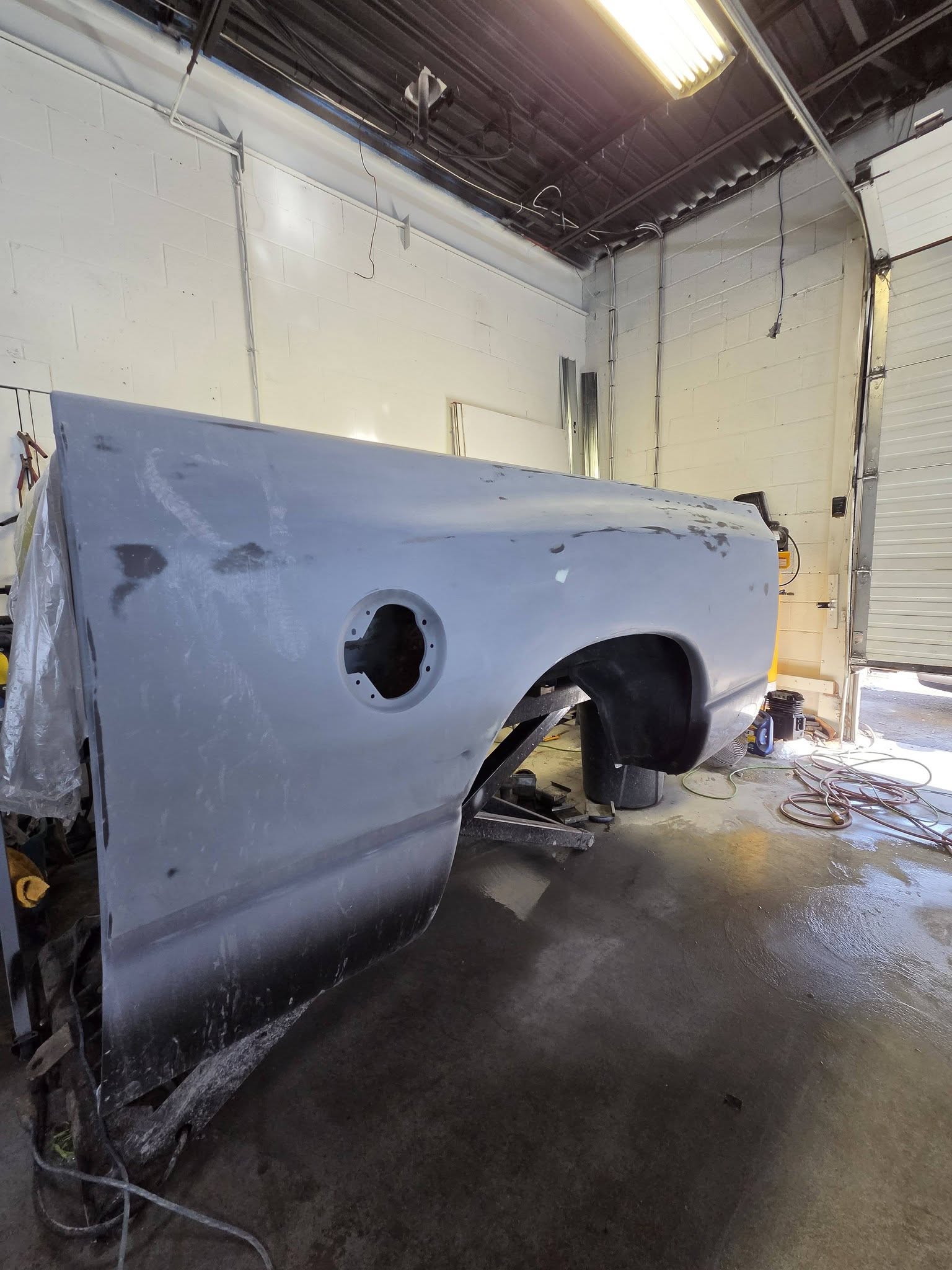
Wheel well repair in Markham — re-fabricated, not patched.
No panel on your vehicle takes a harder beating from Ontario winters than the wheel well. Salt brine, gravel, and slush get thrown directly into the arch by every rotation of the tire — and the factory liner often traps that spray against bare steel instead of shedding it. We cut the rust out and rebuild the arch in fabricated steel.
Why it rusts first
Why wheel wells rust faster than almost any other panel
Every wheel well is really two panels working together: the outer arch lip you can see from outside the vehicle, and the inner wheelhouse structure hidden behind the wheel liner. Both are exposed to a level of abuse most of the rest of the body never sees. As the tire rotates through slush and road salt, it flings that brine straight up into the arch at highway speed, and it does it thousands of times on every drive.
The plastic wheel liner installed at the factory is supposed to shield the metal, but in practice it often works against you. Salt spray gets past the liner's edges and pools in the gap between the liner and the sheet metal, where it has nowhere to drain and no airflow to dry it out. The result is that the inner wheelhouse can be rusted through years before the outer arch lip shows any visible bubbling — the damage is happening exactly where you can't see it.
Because the wheel well sits at the bottom corner of the vehicle, it's also structurally connected to the rocker panel and the quarter panel or fender. Left untreated, wheel well rust doesn't stay contained — it travels along seams and spreads into the panels next to it, turning what could have been a contained arch repair into a much larger job.
Common wheel well problems on Ontario vehicles
- Bubbling paint or a rough, textured edge along the outer arch lip
- Rust-through on the inner wheelhouse, only visible with the liner or wheel removed
- Cracked or missing wheel liner sections that leave bare metal exposed to spray
- Flaking or crumbling metal at the top of the arch near the strut tower
- Rust bleeding down into the adjacent rocker panel or quarter panel
- Vibration or rubbing noise from tire contact against a distorted, rusted arch lip
- Visible daylight or holes through the wheelhouse from inside the wheel well
- Bondo or filler previously used to mask arch rust instead of repairing it
Our process, step by step
- 01
Remove the wheel and liner
We pull the wheel and the plastic liner to get full access to the inner wheelhouse and the back side of the outer arch lip, where most of the hidden damage lives.
- 02
Inspect and map the corrosion
We inspect the inner structure and the outer skin to find every soft spot, documenting how far the rust has travelled toward the rocker panel and quarter panel before we cut anything.
- 03
Cut back to solid steel
All compromised metal is removed — both the inner wheelhouse and the outer arch lip if affected — until only clean, sound steel remains around the repair area.
- 04
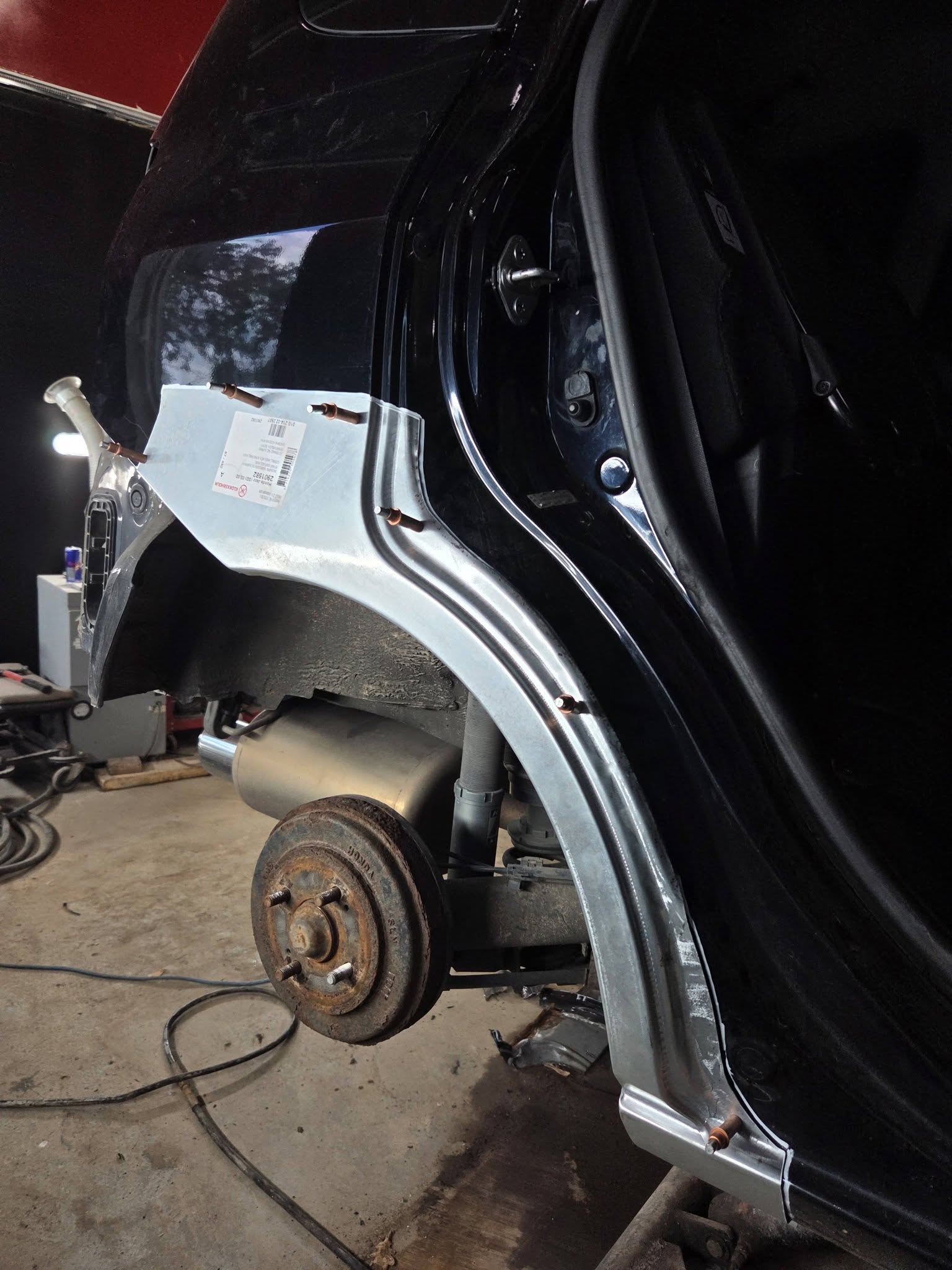
Fabricate and weld new panel sections
We form replacement steel matched to the factory arch radius and profile, then MIG weld it into place so the repair holds the same shape and strength as the original panel.
- 05
Seal, refinish, and reinstall the liner
Weld seams are sealed against moisture, the panel is primed and refinished to match your paint, and the wheel liner is reinstalled or replaced so the new steel stays protected.
When to repair — and when it's too late
Surface bubbling on the outer arch lip, or a wheel liner that's cracked and letting spray through, is exactly the stage where a wheel well repair is contained and affordable. If you catch it here, the job stays limited to the arch itself. Once rust has eaten through the inner wheelhouse and started tracking down into the rocker panel or up into the quarter panel, the repair grows to cover those panels as well — which is why we always inspect the full lower body during a wheel well quote, not just the arch. A vehicle is past reasonable repair only when rust has compromised structural mounting points like the strut tower or suspension attachment areas around the well; at that point we'll tell you honestly rather than take on a repair that won't hold.
What determines the cost
- Whether only the outer arch lip is affected, or the inner wheelhouse structure too
- How far corrosion has spread toward the rocker panel or quarter panel
- Condition of the wheel liner and whether it needs full replacement
- Access complexity — some wheelhouses are partially hidden behind suspension components
- Matching the fabricated arch radius and profile to your specific vehicle
- Paint and refinish work needed to blend the repair into the surrounding panel
Frequently asked
- Why do wheel wells rust before other panels on my car?
- The wheel well takes a direct, constant blast of salt-brine spray, gravel, and slush thrown up by the tire all winter long. Factory wheel liners are meant to protect the metal, but they often trap that spray against the panel instead of letting it drain, so the steel behind the liner corrodes years before rust shows up anywhere else on the vehicle.
- Can you repair just the inner wheelhouse, or does the outer arch need work too?
- It depends on the vehicle, but the two are connected. The outer arch lip is the visible curve you see from outside; the inner wheelhouse is the structural panel behind the liner. We inspect both — often the inner structure has advanced rust while the outer lip still looks presentable, and repairing one without the other just lets rust migrate back.
- Will wheel well rust spread to my rocker panels or quarter panels?
- Yes, and it usually does. Water and salt trapped in the wheelhouse run down along seams into the lower quarter panel and rocker panel, which is why a wheel well repair that's put off long enough often turns into a rocker or quarter panel job as well. Catching it at the arch stage is the cheaper repair.
- Do you replace the wheel liner after the repair?
- If the original liner is intact and fits properly, we clean it, reseal the mounting points, and reinstall it. If it's cracked, brittle, or missing sections — common on vehicles that have sat with wheel well rust for a while — we replace it with a factory-fit liner so the new steel is protected going forward.