
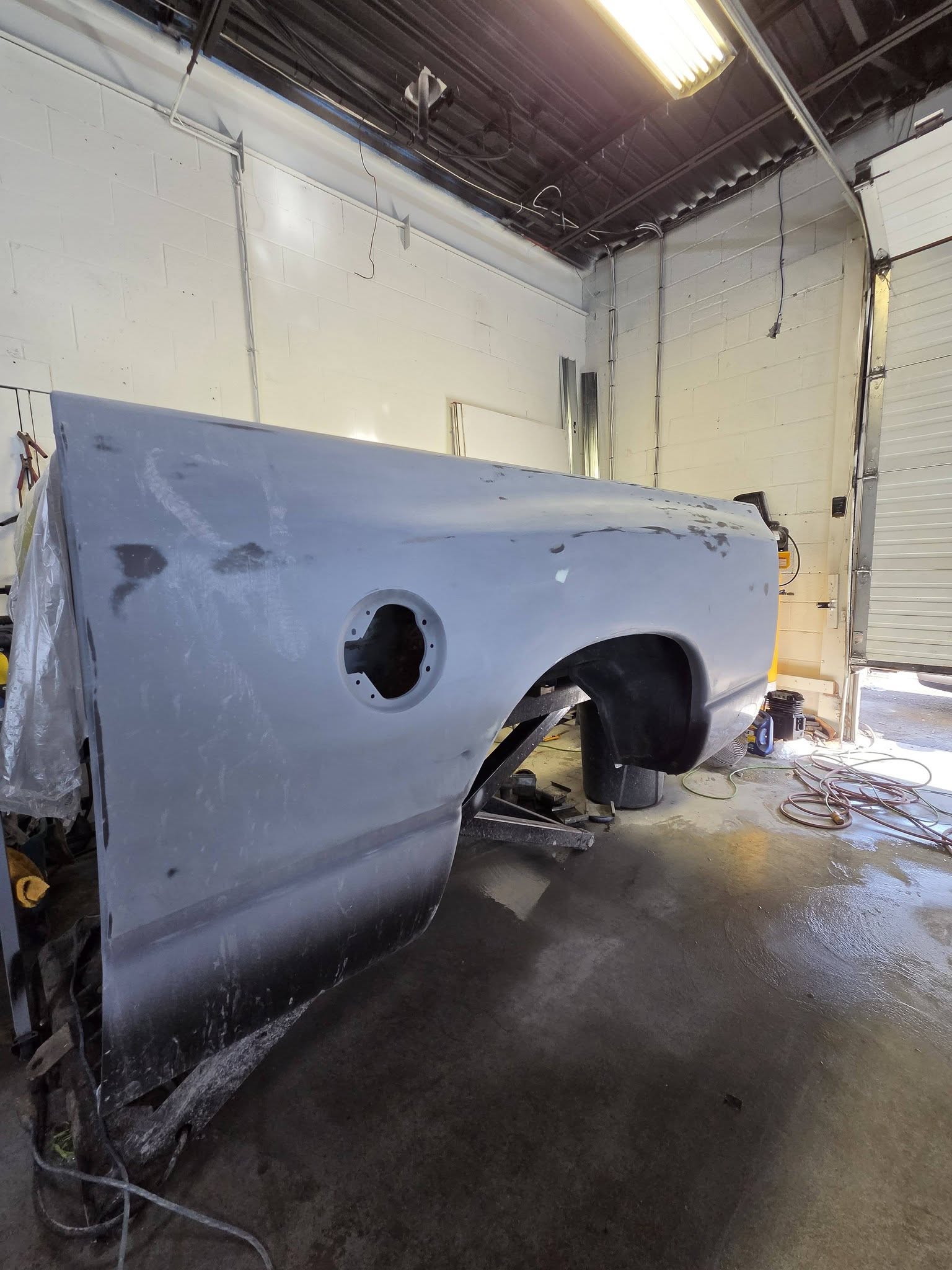
Truck bed rust repair in Markham — rebuilt in steel, not bondo.
Cargo scrapes, tailgate wear, and salt-laden slush that pools on the bed floor eat away at truck boxes from the inside out. We fix bed rust the way it should be fixed — by cutting it out and welding in fabricated steel.
The metal-first difference
Why truck beds rust from the inside out
A truck bed takes a different kind of abuse than the rest of the vehicle. Cargo shifts and scrapes paint down to bare metal, tailgates slam and chip the bottom edge, and rubber cargo mats — meant to protect the floor — often do the opposite. They trap wet slush and road salt against the steel for days at a time instead of letting it drain and dry.
Once moisture is sealed against bare metal by a mat, a load of gravel, or a stack of lumber, corrosion spreads underneath where you can't see it. By the time rust shows through the paint on the bed floor or along a bedside seam, the steel underneath is often already thinned out or perforated. Clogged or rusted-through drain holes make it worse, letting water collect instead of running off.
We treat truck bed rust the same way we treat structural rust anywhere else on the vehicle: cut back to clean steel, fabricate a proper replacement panel, and weld it in. Grinding rust down and covering it with filler or spray liner only hides the problem — it doesn't stop it.
Common failure zones on truck beds
- Bed floor pans, especially under cargo mats and along the front and rear edges
- Bedside panels below the top rail where road spray and grime collect
- Inner wheel tubs inside the box, hidden behind wheel arch trim
- Tailgate bottom edge and the internal tailgate frame
- Bed-to-frame mounting points and support crossmembers underneath
- Stake pocket areas where water sits against unsealed seams
- Rear bumper mounting brackets welded to the bed structure
- Drain channels and grommets that clog with debris and hold standing water
Our process, step by step
- 01
Inspect and assess access
We inspect the floor, bedsides, wheel tubs, and mounting points to map how far the corrosion has spread, then decide whether the repair can be done in place or the bed needs to come off the frame for proper access.
- 02
Strip liner and trim
Any bedliner, mat, or trim covering the affected area is removed or cut back so we can see and reach the actual metal, not just the symptom showing through the paint.
- 03
Cut out corroded steel
We cut back every rusted section to clean, solid steel — no shortcuts, no welding over compromised metal, even if that means removing more than the visible damage suggests.
- 04
Fabricate and weld new steel
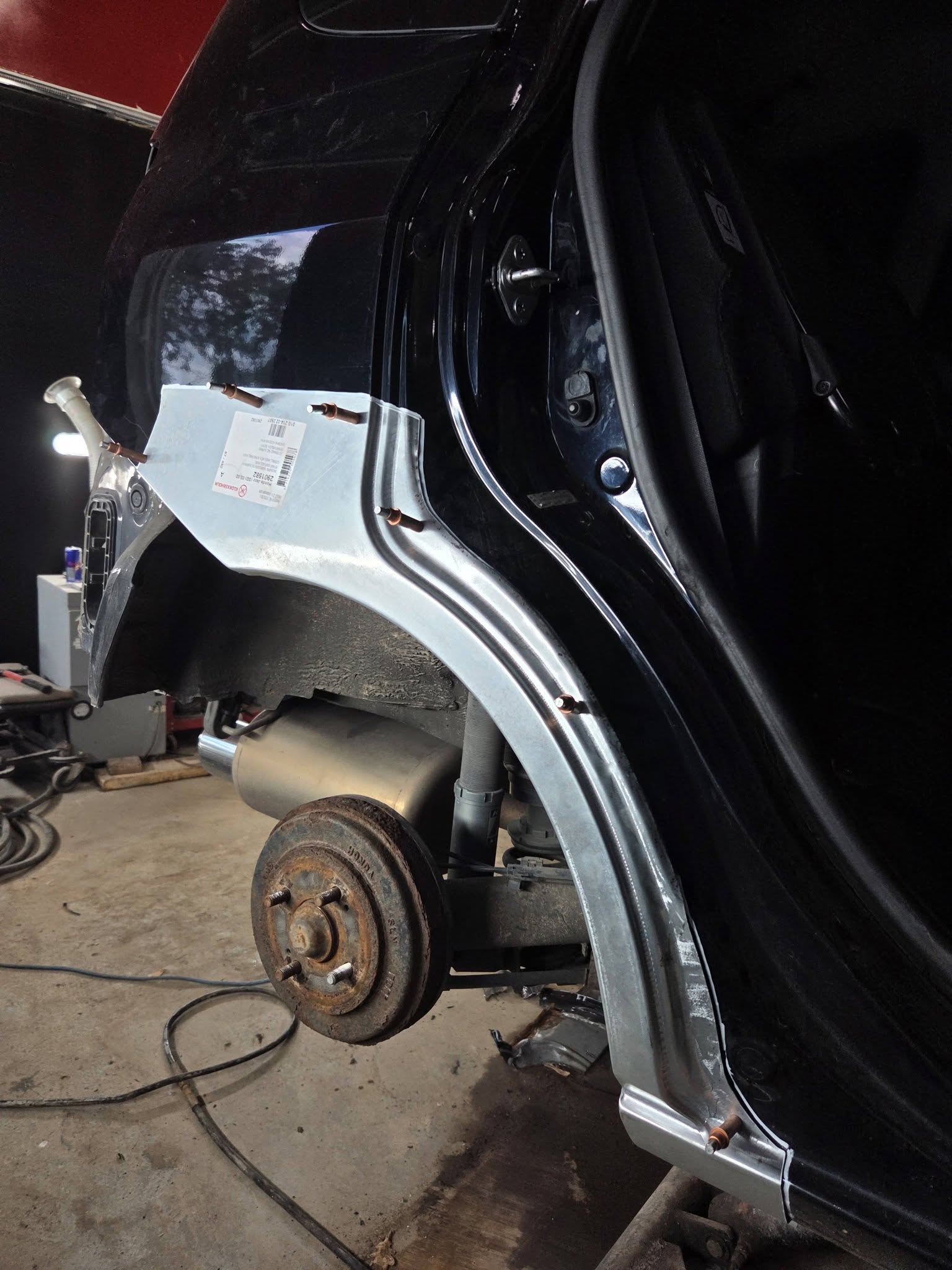
Replacement floor pan sections or bedside patches are fabricated to match factory contours, then MIG welded in and seam-sealed to keep water from getting behind the repair again.
- 05
Seal, refinish, and reassemble
Welds are ground smooth, epoxy-primed, and refinished to match the surrounding paint. Bedliners are reinstalled or a fresh spray-in liner is applied before the bed goes back into service.
When to repair — and when it's too late
Surface rust on a bedside or a few pinholes in the floor are straightforward repairs — the steel around the damage is still sound and a patch welds in cleanly. The concern is what's happening underneath a load you can't see: if the floor flexes, feels soft underfoot, or you can see daylight through it from the wheel well, the corrosion has already progressed past cosmetic. At that stage the bed can no longer be trusted to safely carry cargo load, and if rust has reached the mounting points where the box bolts to the frame, it can affect how securely the bed is actually attached to the truck. Beds in that condition are still repairable in almost every case — they just require more extensive panel replacement rather than a small patch, which is exactly why we inspect and photo-document before quoting.
What determines the cost
- How much of the bed floor or bedside needs to be cut out and replaced
- Whether the bed has to be removed from the frame for access
- Condition of the mounting points and crossmembers underneath
- Number of separate panels being fabricated versus one continuous section
- Paint matching and blending into surrounding bedside panels
- Reinstalling your existing bedliner or applying a fresh spray-in liner
Frequently asked
- How much does truck bed rust repair cost?
- Small bedside patches typically start around $350–$650. Full floor pan or multi-section bedside replacement runs higher because it involves cutting, fabricating, and welding larger sections of steel — and sometimes removing the bed entirely. Every quote is itemized and photo-documented before work begins.
- Do you need to remove the bed to fix rust in it?
- It depends on the extent. Isolated bedside or wheel-tub rust can often be repaired in place. Full floor pan replacement or corrosion at the bed-to-frame mounting points usually requires pulling the bed off the truck for proper access and a clean weld.
- Can you repair the bed if I have a spray-in or drop-in bedliner?
- Yes. We remove or cut back the liner as needed to access the rust, complete the steel repair, then either reinstall your existing liner or arrange a fresh spray-in liner so the repair is fully protected going forward.
- Is a rusted truck bed floor actually a safety issue?
- It can be. A rusted-through floor can no longer safely support cargo load, and if the corrosion has spread to the bed's mounting points, it can compromise how securely the box is attached to the frame. We flag both during inspection.